Discover our Indian Heritage
The Lalbeharrisingh Family of Grenada – a living story of enterprise, land, and community
The story of the Lalbeharrisingh family, now widely known as the Lalsingh family, begins with an early ancestor, Joseph Lalbeharrisingh, believed to have arrived in Grenada during the period associated with the Indian Indenture System. While the details of his arrival remain to be confirmed, his presence marks the beginning of a family whose influence would grow steadily across generations.
From Joseph came two sons, John and James, born in the 1880s. Through them, the family took root in Grenadian life at a time of transition. Moving beyond plantation labour, they established themselves through trade, small business, and the steady acquisition of land. Small shops served not only as places of commerce but as centres of community life, while land ownership provided stability, independence, and the ability to provide for future generations.
As the family expanded, it became closely connected with other established families through marriage. Rose Henrietta Lalbeharrisingh married George Emanuel Nyack, and Dolphus Gardner Lalbeharrisingh married Venus Florina Rathan, granddaughter of John Abraham Nyack. These unions strengthened ties between the Lalbeharrisingh, Nyack, and Rathan families, forming a wider network of kinship and shared history across the island.
The family line continued through James and his son Kingsley. Kingsley married his second cousin, Constance Germina “Pearl” Lalbeharrisingh, and during his time the family name was shortened from Lalbeharrisingh to Lalsingh, reflecting both adaptation and continuity. Kingsley also had a family with Eileen Lynthia Bonaparte, and together they raised children including Elma, Kenny, Kingsley, Mavis, and others who carried the family forward.
The family was based in La Fortune, where they held lands, and also owned lands in Conference. These lands formed part of the family’s long-term investment in stability and livelihood. It was Kingsley who made the decision to give land at Conference to the Presbyterian Church, an act that reflects both generosity and the broader historical context in which Indian families were engaged by religious institutions and often drawn into Christian communities. The relationship between land, faith, and community formed an important part of the family’s experience.
Over time, the family’s presence in Sauteurs and surrounding areas grew stronger. Today, the Lalsingh family is associated with several successful businesses in Sauteurs, continuing a long tradition of enterprise. Among the most notable is Kenny Lalsingh, proprietor of Kalico Supermarket. Through Kalico, he established a strong and trusted business presence, expanding operations with branches across the island and contributing to the local economy.
Kenny Lalsingh’s contribution extends beyond business. He has been actively involved in public life, serving as a politician and community leader, and has consistently supported community development initiatives. His work reflects a commitment not only to enterprise, but to service, leadership, and the well-being of the wider community. In this way, he continues the family tradition of combining economic activity with social responsibility.
The story of the Lalbeharrisingh, or Lalsingh, family is one of movement, adaptation, and steady growth. From early beginnings rooted in trade and land, the family has expanded into multiple areas of national life, maintaining strong ties to community and place.
It is a living story, shaped by hard work, family connection, and a commitment to building something lasting, a legacy that continues to evolve across generations.

Baby and Constance - daughters of John and Alice Lalbeharrisingh

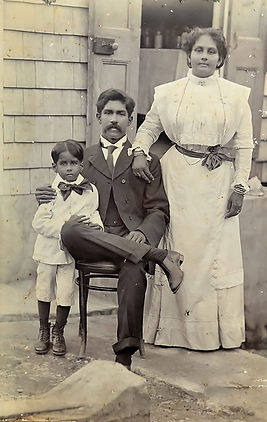
Jane Lalbeharrisingh and son Kingsley age about 17
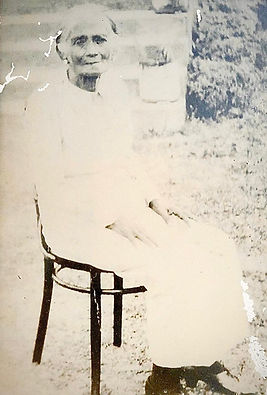
Alice Lalbeharrisingh nee Fletcher, wife of John Lalbeharrisingh