
Discover our Indian Heritage
The Story of the De Gale Family
The De Gale family is rooted in the history of Indo-Grenadian settlement and development, with its origins linked to the wider movement of Indian indentured migration to the Caribbean following the Slavery Abolition Act 1833.
The earliest known patriarch of the family in Grenada is Jago George De Gale, also referred to as Jagoo, who was born around 1849. While his exact arrival in Grenada is not documented, he is identified in records as an East Indian resident of Hermitage in Saint Patrick. His life reflects the transition from the indentured or immediate post-indentured generation into one of settlement and stability. It is possible that he arrived as a child with his parents, during the later phase of indentureship, or that he was born in Grenada to early immigrants. Regardless of this uncertainty, by adulthood he had established himself as a man of influence within his community. It is also believed that Jago was the family name, and not his first, and that the name DeGale was adopted for prestige or because they worked with the DeGale family in nearby Mt. Rose.
Jago settled in Hermitage, Saint Patrick, where the De Gale family became firmly rooted. He married Elizabeth, also recorded as Liz Suenarine De Gale, and together they built a large family. Their children included Frederick (1885–1959), William George (1886–1943), Gentle (1887–1940), Alice (1889–unknown), and Edith (1893–1922), along with Julian Victor, Amy, Lionel Sydney (Wells), Eustace Ferdinand (Alfred), Enoch, Lovell, Mahlon, Genevra, and Justina. With a total of fourteen children, this represented one of the early established Indo-Grenadian family units grounded in land ownership and long-term settlement.
Despite being unable to read or write, Jago demonstrated strong business awareness and agricultural skill. In 1895, he entered into a formal mortgage agreement with two other East Indian men, securing a loan of £300 at an interest rate of 6 percent. Land in Pearls, Saint Andrew was used as collateral, and the agreement required the export of cocoa and spices to a London-based firm. The condition to ship at least 25 bags of cocoa annually, each weighing 175 pounds, indicates that he was engaged in commercial agriculture and connected to international trade networks.
Over time, Jago accumulated significant landholdings, reflecting both economic success and strategic planning. His properties included a 16-acre estate known as “Hydro” in Pearls, Saint Andrew, a 7-acre property called “Moaloof” in Hermitage, Saint Patrick, and several additional parcels of land in Hermitage. These holdings established him not only as a farmer, but as a landowner and respected figure within the community.
Jago died on August 19, 1914, at the age of 65. Two days before his death, he prepared his will, demonstrating careful planning for the future of his family. He appointed his sons Mahlon and Gentle as executors of his estate and left the Moaloof property specifically to Gentle and Frederick. The remainder of his lands and assets were distributed among his wife and children. His wife Elizabeth survived him until 1920, maintaining the continuity of the family.
The second generation of the De Gale family inherited not only land, but stability and opportunity. Gentle De Gale played a key role in family affairs, including registering his father’s death and managing responsibilities assigned to him. Frederick De Gale, who lived until 1959, was likely instrumental in maintaining the family’s presence and holdings in Hermitage and in Hydro. He also executed a will devising and bequeating his land and personal property to all his children. William George and the other siblings formed part of a generation that transitioned the family from early settlement into an established and recognized community presence.
The contribution of the De Gale family extends beyond individual success. Their transition from descendants of indentured migrants to landowners and agricultural producers represents a broader pattern of advancement within Grenadian society. Through cocoa and spice production, land ownership, and family continuity, they contributed to the development of rural communities in Saint Patrick and to the shaping of Indo-Grenadian identity.
The story of the De Gale family is one of resilience, adaptation, and long-term impact. From uncertain beginnings tied to migration from India to the establishment of land, family, and economic stability in Grenada, their legacy reflects the strength and determination of a people who built lasting foundations for future generations.

Elizabeth DeGale

Fredrick Degale

Julien Degale
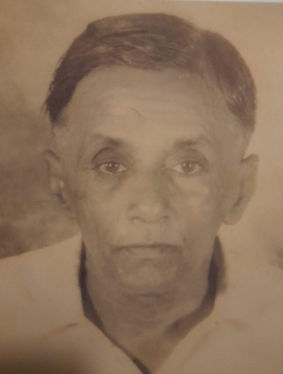.jpeg)
Julien DeGale
Enid and Wells DeGale
